

Why surplus building materials cost less but match trade quality
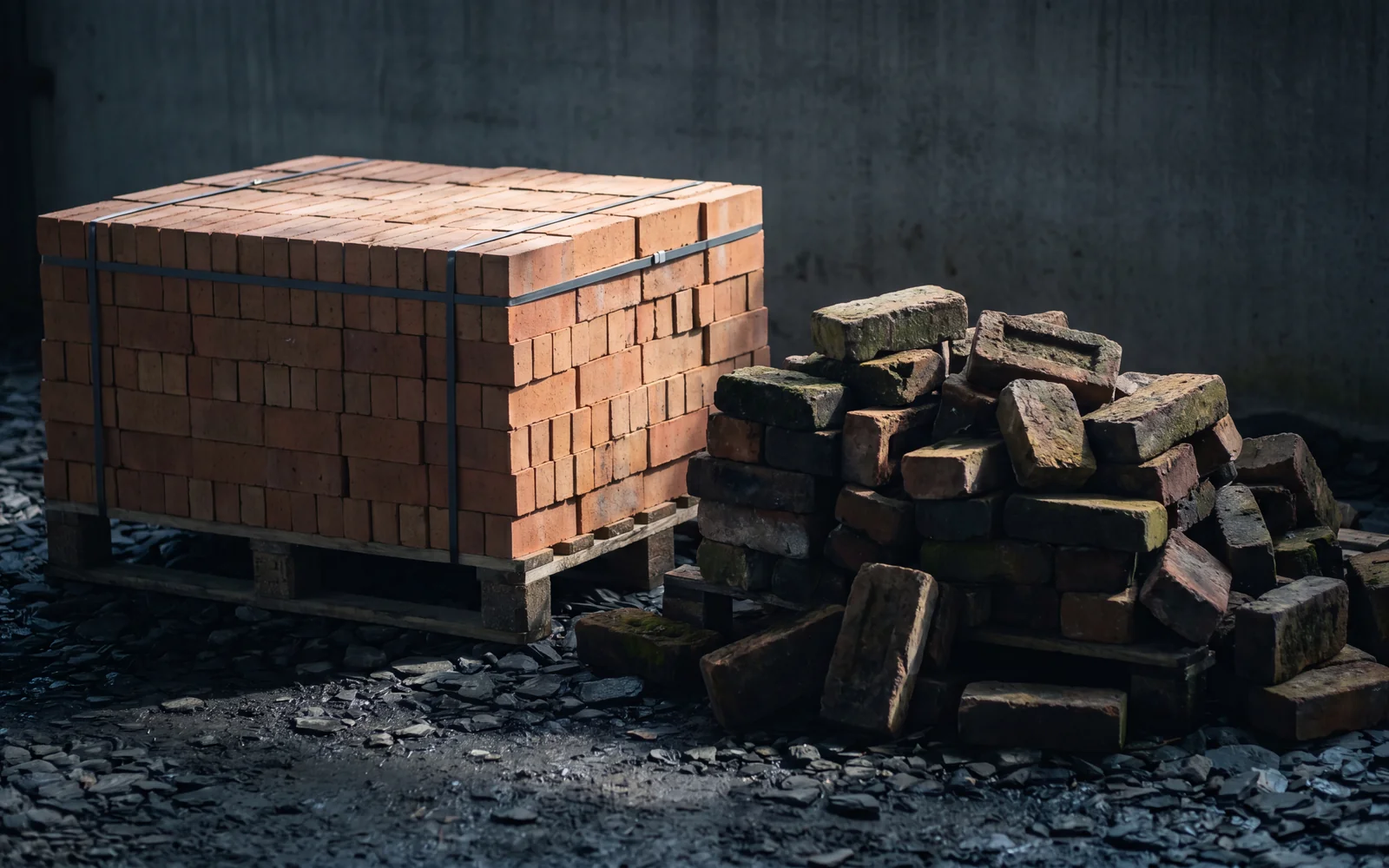
If you have ever priced up a build, you know the feeling. The materials list comes back from the merchant, and the number at the bottom makes you read it twice.
Here is something most people outside the trade never see. Somewhere nearby, a major developer has just finished a project with pallets of those exact materials left over, and they need them gone. That gap is our whole business. This post explains how it works, why the quality is identical, and how to tell genuine surplus from the stuff worth avoiding.
Where surplus stock actually comes from
Large developments are ordered with margin for error. Nobody building two hundred homes orders the exact number of bricks, because running short stops a site dead, and a stopped site costs far more than a few spare pallets. So projects finish with surplus: full packs of blocks, banded pallets of bricks, aggregates still sitting in the bays.
For the developer, that leftover stock is a problem. It takes up space they are contracted to clear, and carting it to the next project usually costs more than it is worth to them. So it sells at a major discount to whoever can move fast and take volume. That is us.
Why the quality is identical
This is the question everyone asks, usually with one eyebrow up, so here is the straight answer. Surplus stock is not a lower grade of product. It is the same material, from the same manufacturers, ordered to the same specification as the rest of the development. The houses got built with the first ninety five percent of the order. We buy the last five percent.
Compare that with genuine seconds or reject stock, which failed quality control and gets sold as exactly that. Surplus never failed anything. It simply was not needed.
Why merchants cannot match the price
A traditional merchant carries premises, yard staff, a delivery fleet and shareholder expectations, and every bit of it is stitched into the price on the counter. Their model is to buy from manufacturers at trade terms and add margin on top.
Our model starts from a lower number. We buy below standard trade terms because developers price surplus to disappear, not to profit. Then we keep the operation lean and local, delivering only within 50 miles of Manchester so haulage never bloats a quote. The saving starts at the source, which is why it survives all the way to your invoice.
Pricing a job up right now? Send us the list and your postcode.
Get my quoteWhat to check when buying surplus from anyone
A fair warning: not everyone selling cheap materials is selling surplus. Here is what we would check, and what you are welcome to check with us.
Ask where the stock came from. A genuine supplier can tell you it came from developer surplus instead of mumbling about a contact. Look at the condition, because full banded packs and clean pallets are the signature of surplus, while broken mixed lots are the signature of something else. And confirm the specification matches your job, since the right price on the wrong block is no saving at all. Send us your requirements and we will tell you honestly whether our current stock fits.
The bottom line
Surplus building materials cost less because of where they are bought, not what they are. The developer needed them gone, we bought them well, and the difference lands in your quote. Same manufacturers, same specification, smaller invoice.
If you are pricing up a project anywhere within 50 miles of Manchester, test the model. Send us your materials list and your postcode, and we will come back within 1 working day with a number. Bring your merchant's quote along for the ride. We like a comparison.
Get a number worth comparing.
Send us your materials list and the postcode it is going to. We price your exact order and the delivery distance, then come back within 1 working day.